
by admin
Share
Introduction: The Bodyguard Your Website Never Knew It Had
Imagine you own a popular nightclub. Every night thousands of people line up at the door. Most are legitimate patrons, but a few are carrying fake IDs, stolen credit cards, or worse—intent on starting a brawl inside. You could hire more bouncers to check every pocket and purse, or you could install a smart security gate that learns what trouble looks like and blocks it before the door even opens.
That smart gate is exactly what a Web Application Firewall (WAF) does for your website.
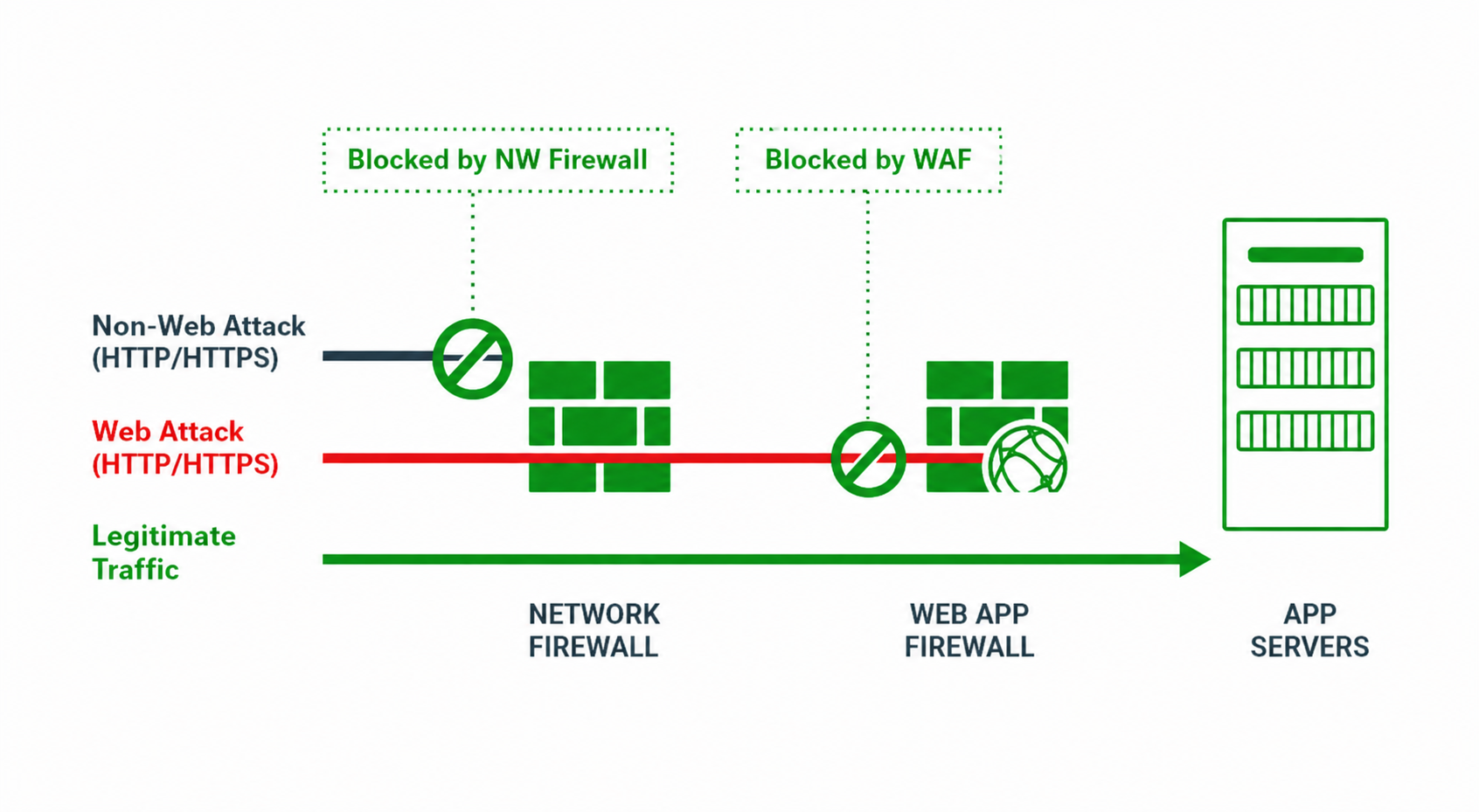
A WAF is a reverse-proxy shield that sits between the public Internet and your web server. Instead of inspecting people, it inspects HTTP/HTTPS requests—the messages browsers and bots send to your site when they want to load a page, log in, or submit a form.
It compares every request against a set of security rules (a “policy”). If the request looks malicious—say it contains a SQL injection string, a cross-site scripting payload, or a bot scraping prices at 400 requests per second—the WAF drops, redirects, or challenges it before it ever touches your code.
What a WAF Actually Is (No Jargon, Promise)
A WAF is a reverse-proxy shield that sits between the public Internet and your web server. Instead of inspecting people, it inspects HTTP/HTTPS requests—the messages browsers and bots send to your site when they want to load a page, log in, or submit a form.
It compares every request against a set of security rules (a “policy”). If the request looks malicious—say it contains a SQL injection string, a cross-site scripting payload, or a bot scraping prices at 400 requests per second—the WAF drops, redirects, or challenges it before it ever touches your code.
STAY IN THE LOOP